A mold test result tells you two things: whether mold spores are elevated in your indoor air compared to the outdoor baseline, and which species are present. If your indoor count is higher than outside, or if you see species like Stachybotrys or Chaetomium that rarely show up in outdoor air, you have an active indoor mold problem - not just a musty smell. Air quality and mold testing in Toluca Lake California is the only way to confirm that with numbers instead of guesswork.
We run these tests every week in Toluca Lake, Studio City, and the surrounding hills. What follows is how the sampling works, what the lab numbers actually mean, and where most homeowners misread their own reports.
What Air Quality and Mold Testing Actually Measures
Air quality and mold testing is a two-part diagnostic that captures airborne particles and surface samples, then sends them to an accredited lab for species identification and spore counts. It answers whether mold is actively releasing spores into the air you breathe, not just whether mold exists somewhere in the building.
Every mold test has two halves. The first is the air sample - a calibrated pump pulls a known volume of air across a sticky slide. The second is the surface or tape-lift sample, which tells you what is growing on a specific spot. You need both. An air sample alone can miss a colony that has not started sporulating yet. A surface sample alone cannot tell you whether spores are becoming airborne.
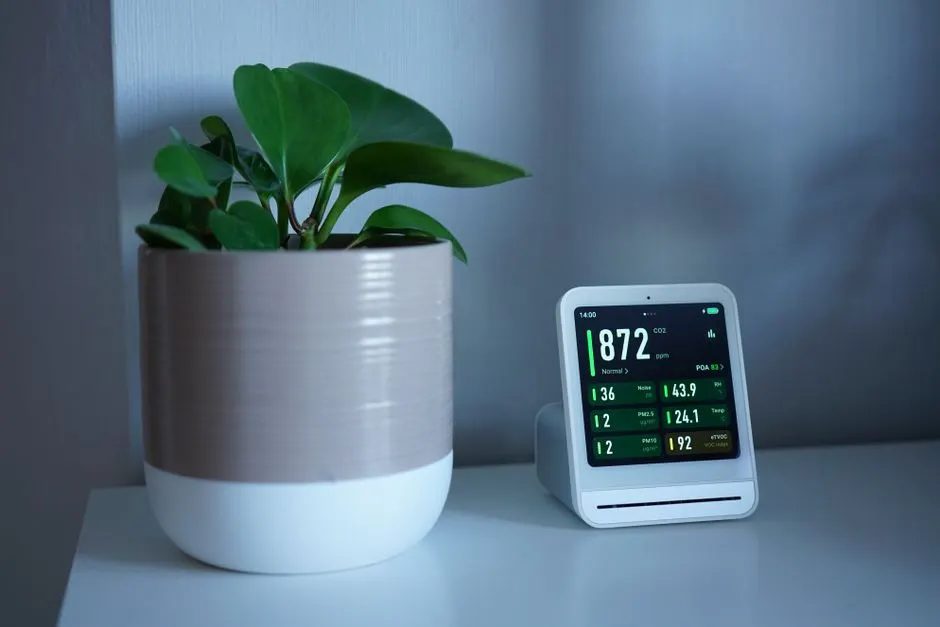
We also log temperature, relative humidity, and moisture readings at each sample point. Those numbers matter because mold needs sustained humidity above 60% to colonize. A spore count without a humidity reading is half a story.
How Is Indoor Air Quality Mold Sampling Done in Toluca Lake California?
Indoor air quality mold sampling in Toluca Lake California follows a standard protocol: one outdoor control sample, then one indoor sample per distinct area or concern. The outdoor sample is the baseline. Without it, an indoor count of 800 spores per cubic meter means nothing - it could be normal for a given week.
Here is the sequence our technicians follow on a typical residential job:
- Walk the property and identify suspect zones - under sinks, around window frames, behind baseboards, in the attic, near the HVAC return.
- Take an outdoor control sample upwind of the house.
- Run 75-liter air samples in each suspect room, usually 5 to 10 minutes per sample.
- Collect tape-lift or swab samples from any visible growth.
- Log moisture meter readings and humidity at each point.
- Ship samples overnight to an AIHA-accredited lab.
Lab turnaround runs 24 to 72 hours in most cases. Rush processing is available if you are in escrow or dealing with a landlord dispute. If you need results fast, we offer Same Day Mold Testing in UNIVERSAL CITY, California for urgent situations.
What Do Mold Spore Counts Mean in Toluca Lake?
Mold spore counts are reported in spores per cubic meter of air (spores/m³). There is no single "safe" number - the meaningful comparison is indoor versus outdoor on the same day. If your indoor count is higher than your outdoor control, you have an indoor amplification source.
That said, here are the ranges we see in practice and how we read them:
- Under 500 spores/m³ indoors, lower than outdoor: normal. No active indoor growth indicated.
- 500-1,500 spores/m³, roughly equal to outdoor: borderline. Worth investigating if you have symptoms or a musty odor.
- Over 1,500 spores/m³, or higher than outdoor: elevated. There is an active indoor source.
- Any Stachybotrys, Chaetomium, or Fusarium detected indoors: significant. These species indicate chronic water damage.
Species matter as much as counts. Cladosporium and Alternaria are common outdoor molds - finding them inside at low levels is usually just outdoor air coming in. Aspergillus and Penicillium are more concerning because they thrive in indoor conditions. Stachybotrys chartarum, the so-called black mold, needs constant moisture and almost never appears in a healthy building.
If you want the full lab breakdown of what is in your air, our Air Quality And Mold Testing in UNIVERSAL CITY, California service includes both air and surface samples with a written interpretation of the results.
Reading a Lab Report: The Numbers That Matter
A lab report is not a pass/fail document. It is a comparison tool. The four columns to look at first are the outdoor control count, the indoor count, the dominant species indoors, and the presence of water-indicator species.
Here is how we walk clients through a typical report:
Step 1 - Compare indoor to outdoor. If indoor is 2x or more the outdoor count, that is a red flag. If indoor is lower than outdoor, you likely do not have an active indoor source, even if the raw number looks high.
Step 2 - Look at the species mix. If the indoor species match the outdoor species, you are probably seeing normal infiltration. If the indoor sample is dominated by a species that is rare or absent outdoors, that species is growing inside.
Step 3 - Check for water-indicator species. Stachybotrys, Chaetomium, and Ulocladium only grow where there has been sustained moisture. Their presence means a water source needs to be found and fixed.
Step 4 - Cross-reference with moisture readings. A high spore count in a room reading 45% humidity is odd. A moderate count in a room reading 70% humidity is a clear warning.
If the report shows elevated spores and you need a licensed assessor to interpret it in person, we can send a Certified Mold Inspector in UNIVERSAL CITY, California to walk the property and connect the lab numbers to physical conditions.
Why Toluca Lake Homes Test the Way They Do
Toluca Lake has a specific set of conditions that shape mold test results. The neighborhood sits in a basin with mature tree canopy, older housing stock, and a marine-influenced climate that keeps humidity higher than the rest of the San Fernando Valley.
Three factors come up again and again in our testing here:
- Age of housing stock. Many homes date to the 1920s through 1950s. Original galvanized plumbing, unvented crawl spaces, and single-pane windows create moisture pathways that newer construction does not have.
- Tree canopy and shade. Heavy shade keeps roofs and walls cooler and slower to dry after rain. That extends the window for mold growth.
- HVAC systems in older homes. Original ductwork is often leaky and uninsulated. In summer, cool air in the ducts meets warm humid attic air and condenses - a classic hidden mold source.
We also see a lot of pool houses, guest units, and detached garages in this area. Those structures often have their own moisture problems and are frequently overlooked during a standard home inspection.
If you are buying or selling in the area, a Home Mold Inspection in UNIVERSAL CITY, California before closing can catch these issues while there is still time to negotiate.
Common Mistakes When Interpreting Mold Test Results
The most common mistake is reading a spore count without the outdoor control. A number by itself is meaningless. We have seen homeowners panic over a 1,200 spores/m³ reading that was actually lower than the outdoor count on a windy day.
Other mistakes we see regularly:
- Testing only one room. Mold sources are often in a different room than the symptoms. Test the whole house or at least every suspect zone.
- Testing after remediation without a clearance protocol. Post-remediation testing has different pass criteria than initial testing. A "normal" count after remediation does not mean the job was done correctly if the protocol was not followed.
- Relying on a home test kit. Consumer petri dish kits grow whatever lands on them. They cannot distinguish species accurately or give you a spore count per cubic meter.
- Ignoring the moisture source. Killing mold without fixing the water intrusion guarantees it comes back. The test tells you where you are; the moisture fix is what keeps you there.
- Testing too soon after a water event. Mold needs 24 to 48 hours of sustained moisture to colonize. Testing immediately after a leak may show nothing even if growth is starting.
If you have already had remediation done and want to verify it worked, we offer Post Remediation Mold Testing in UNIVERSAL CITY, California using the same lab and protocols as our initial assessments.
When to Call a Professional
Call a professional when you have visible growth larger than about 10 square feet, when you smell mustiness but cannot find the source, or when occupants are experiencing symptoms that improve when they leave the house. Those are the three situations where testing pays for itself.
You should also call if you have had a water event - a burst pipe, roof leak, or appliance failure - and it was not fully dried within 48 hours. Even if you see no visible mold, the conditions are right for it.
Our team at Mold Remediation Service Universal City handles the full sequence: inspection, sampling, lab interpretation, and remediation if needed. We find the moisture source, fix the conditions, and verify with post-remediation testing before we call the job done.
Frequently Asked Questions
How much does air quality and mold testing cost in Toluca Lake California?
Typical 2026 pricing in this area runs $300 to $600 for a standard residential package with one outdoor control and two to three indoor samples. Larger homes or commercial properties run $600 to $1,200 depending on sample count. Lab fees are included in that range.
What do mold spore counts mean in Toluca Lake?
Spore counts tell you how many mold spores are in a cubic meter of air. The number only matters compared to your outdoor control sample taken the same day. Indoor counts higher than outdoor indicate an active indoor source.
How is indoor air quality mold sampling done in Toluca Lake California?
A calibrated pump pulls a known volume of air - usually 75 liters - across a sticky slide. Samples are collected from each suspect room plus one outdoor control, then shipped to an accredited lab for species identification and counting. Results come back in 24 to 72 hours.
What is a normal mold spore level in Toluca Lake?
There is no universal normal. A healthy indoor count is one that is lower than or roughly equal to the outdoor count on the same day. In practice, that is often under 500 spores/m³ indoors, but the comparison matters more than the raw number.
Who offers air quality and mold testing in Toluca Lake California?
Mold Remediation Service Universal City provides air quality and mold testing throughout Toluca Lake and the surrounding San Fernando Valley. We handle sampling, lab submission, and written interpretation of results. Call (833) 929-5837 to schedule.
Get Help with Mold Remediation Service in UNIVERSAL CITY
If your Toluca Lake home has a musty smell, visible growth, or a recent water event, testing gives you the facts. We handle the sampling, read the lab report with you, and fix the source if remediation is needed.
Call (833) 929-5837 to schedule air quality and mold testing in Toluca Lake California. We serve Toluca Lake, Universal City, Studio City, and the surrounding San Fernando Valley.